
Why Motorola failed in Six Sigma implementation
Table of Contents
1. Motorola Early years
2.Turning Point
3.Start of Quality Revolution
4.Taste of success
5.Birth of Six Sigma
6.Others followed
7.What went Wrong
8. Why Six sigma did not save Motorola
9. Conclusion
Motorola early years
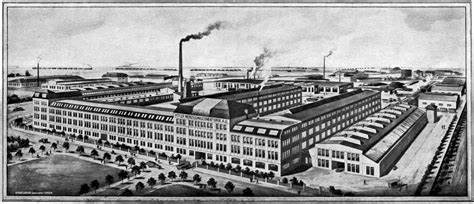
Galvin brothers had started the Galvin manufacturing corporation on Sep 25 1928.They started making Battery Eliminator. This was a breakthrough Product. They then invented Car radios. Since it was meant for Cars (“Motor”) & had sound(“OLA”) they called it MOTOROLA.
Motorola was a pioneer in telecommunication devices. They had many innovations in their product line. The police car radios, walkie-talkies that were used in World war II were made by them. They also made communication sets for the space. They made compact television in 1947 that was much cheaper than available models in the market.
They Launched first big colour television that was 19” in size.
Turning point
They made Quasar Television. They advertised their television “Quasar” as most easy to repair. Matsushita had entered US markets and their television was advertised as that did not need repair. This captured the customers and Motorola started losing sales. They had to sell this business to Matsushita. Soon they started losing market share and realized that Quality of Japanese models were much better. On realization of this they decided to improve their Quality in 1981.


Start of Quality revolution
Bob Galvin, the chairman of Motorola directed Bill Smith, an Engineer working with Motorola, to come up with a plan for improving Quality. The target set was 10 times in 5 years. Bill started to work on all the teachings of Quality Gurus and put together the plan Design for Manufacturability. It was Measure, Analyse , Improve and Control processes using statistical tools to reduce variation and prevent defects.
Taste of Success
This technique brought dramatic results since they were based on proven statistical tools. This improved the Quality and reduced defects in a major way. Motorola could achieve 10 times improvement, a target that was set by 1985. The processes improved however they were still not enough. When Bob visited Matsushita, he realized the need to increase further to catch up with Japanese manufacturer. On return, he set 10X target again, This time the time line to be met was within 3 years.
Birth of Six Sigma
Motorola’s team again went to work. They trained massively all the workforce and did improvements through-out the organization. The principles of Deming and Juran (TQM) was basis for improvements. Again, they achieved the targets. They presented this to American Industry and bagged the Malcom Baldridge award. With the success story they coined this strategy as Six sigma.
Others Followed
Jack Welch, GE chairman, implemented Six sigma, that was now DMAIC methodology, throughout his company. Many others followed this and it became a very popular movement. It soon caught the attention of many consultants and it became a big business to teach Six sigma to consult organizations for six sigma. The levels were divided initially into yellow belt, green belt, Black Belt & Master black Belt. Later on, white belt was also added.
What went Wrong
Japanese were not practicing Six sigma but were way ahead and the west tried to follow. So, what was is it that made Japanese Quality which Six sigma could not match. If we observe closely, we find that Japanese quality was bad post-World War II. They were trained by Deming and later on Juran in 1950. They took upon them to improve as a need for survival. It was through out the organization. While the same was true even for Motorola but it relied heavy on only one methodology that was Six sigma MAIC.
Why Six Sigma did not save Motorola
Motorola started to decline as Apple was launched. New entrant with a new technology , Android, caught the customer’s fancy. Motorola failed to follow customer trend. There were 4 reasons why Motorola could not succeed post 2006.
- Customer Requirements – Definition of Six sigma is to meet customer expectations by reducing variation to have a competitive edge. This deals with manufacturing efficiency. It does not speak of Customer trends. However, the define phase of Six sigma focusses on Customer requirements. Motorola failed to gather customer requirement. It was an innovative company but lost its focus by concentrating on reducing defects.
- Lack of leadership: Japanese companies have Hoshin Kanri which is a technique to deploy policy to all stages of company. It starts with Company goal and that is what makes all improvement project align with the company Goal. Motorola had followed this in the first 10 years of implementing Six sigma and therefore had achieved success. Later on, it became isolated problem solving that were not linked to the major goal of the company. The Organisation leadership did not drive this movement and therefore they failed to be effective.
- Quick Change: For the digital devices, software became an integral part. Motorola failed to changeover due to their slow methods of problem-solving methodology. The newer method of rapid Changeovers was something that was not adopted.
- New Technology: Motorola relied on old technology as its government customers wanted them. However, the world was changing to new 3G technology and Motorola failed to embrace it.
Conclusion
Six sigma was coined by Motorola, it encompasses all the philosophy, tools and techniques of earlier Quality gurus. What Motorola did was to make the framework DMAIC and propagate the metrics 3.4 ppm. In effect, this was the limitation it put upon itself. The philosophy of Juran was to continuously improve all processes. Japanese did not have Six sigma but they were driven by organizational goals in meeting customer requirements. Motorola lost its focus on customers and innovations, which was its core principle, to meet the changing customer requirements. This led to its downfall when the competition Apple scored over it with better products suited for customers.