

Any Business is successful if its product or service fulfills customer requirements. The customer who is ready to pay will always expect the product or the service to provides value to him. This usually should be more than the money he parts with. If he finds that the product he purchased is worth his money he will be satisfied. This may not result into a repeat purchase but it means that the basic stage has been reached where customer will consider this business for future purchase. This, however, does not mean that this supplier alone will be considered. If there are 2 more such suppliers in the market, he may consider any one depending upon his perception. So, what exactly is his requirement? Let us find out in this article.
1. What are Customer Requirements?

ISO9001 , The International Standard on Quality System,defines Customer requirement as follows.
Customer requirements are stated & Implied needs, expectations, and desires that a customer has regarding a product, service, or solution. These requirements could be explicitly stated, such as in a contract or feedback survey, or they could be implied. However, a third aspect is the perception that a customer has about the product.
There are two main types of customer requirements:
• Explicit requirements: These are clearly communicated needs, such as specific features, functionality, or service levels. For example, when you order a pizza- medium size, thin crust, extra cheese, specific toppings, these are explicit requirement. The size of pizza will be 6 “in diameter and this is stated and understood by customer as well as supplier without any ambiguity.
• Implicit requirements: These are unspoken needs or expectations based on industry standards, trends, or past experiences, such as timely delivery or ease of use. In case of pizza, the temperature is unstated or implied need. It is expected that Pizza should be delivered hot without any stated requirement. The perception of the customer also falls in the implicit requirement. This is a difficult need as we will discuss further.
2. The Importance of Understanding Customer Requirements

- Customer Satisfaction and Loyalty When the supplier understands customer requirements, He will be able to provide the product & service that can be designed, produced and delivered to meet them. This will lead to customer satisfaction. Customer satisfaction leads to trust in the brand and a relationship with the customer for long term loyalty.

- Competitive Advantage Businesses that can meet or surpass customer requirements so that customer is delighted often make them stand out in a competitive marketplace. Apple products were designed to produce products that the customers did not expect and therefore when they were delivered created a WOW experience. This became their USP.

- Product/Service Improvement The identification of the customer requirement is not easy and may require continuous fine tuning. By improving the product /service on continuous basis one can achieve better Customer Satisfaction and continued business.
3. How to Identify Customer Requirements

- Direct Communication by directly communicating with customers, their requirements can be identified first hand. There are direct methods like surveys, interviews, or focus groups. These methods can provide valuable insights into what they need or expect. This method allows businesses to ask targeted questions and gain direct feedback, creating an open channel for communication. In case of customised product, this is the only way to get customer requirement. This is a good opportunity to understand implicit requirements by asking all relevant questions. However, this type of engagement has a shortcoming. The engagement is limited to the sample size and extrapolating it to the market may be risky. The business needs to define the target customers and the sample should represent this market as far as possible.
- Data Analytics The present emerging technologies can help in analysing customer behaviour, purchase history, and browsing patterns that can help in identifying the customer requirements. Tools like web analytics, CRM systems, and social media monitoring platforms can help uncover trends and expectations.

- Market Research Any business needs to be aware of broader market trends, industry standards, and competitor offerings. This enables businesses to not only meet current customer needs but also anticipate future demands and can tune their product /service accordingly.
- Customer Feedback Customer feedback is obtained from customers who have already purchased the product or have reviewed product at stores, online or elsewhere. These are important inputs for further development.
4. How to use Customer Requirements.
Once customer requirements have been identified, businesses must make use of them in various ways.
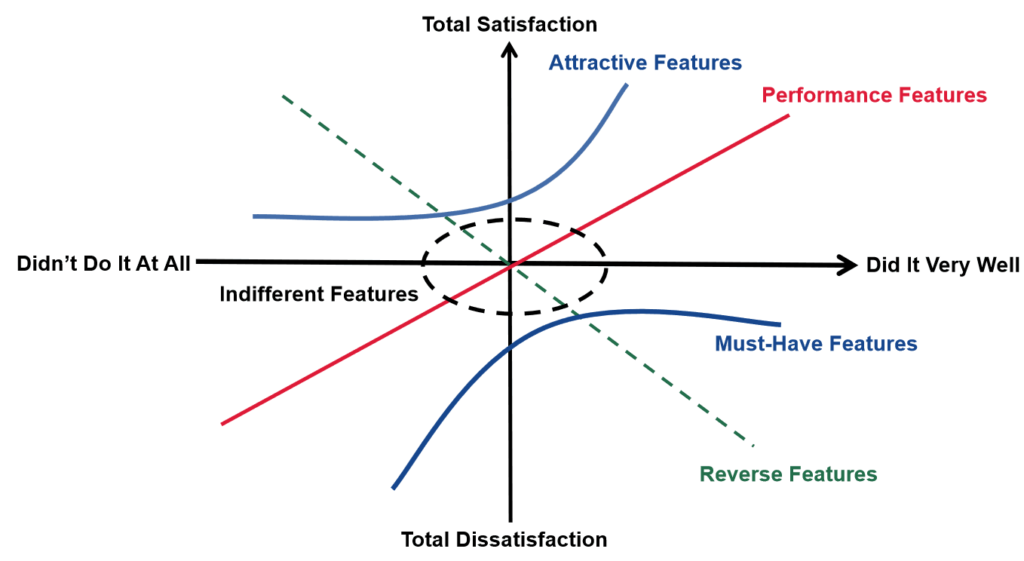
- Product Development and Service Design – Product/Service need to be designed and developed to meet the Customer requirements. These requirements can be deployed into product features by Quality Function Deployment tool. Before this is done, the features are divided further into 3 categories. Must Have, Delighter (Excitement), normal (One dimensional) as per Kano model.
- Communication If the customer is informed of how the product/service will fulfil his requirements. He will be better prepared to accept the product. The customer perception about the product should be tuned to the product/Service performance. Communication helps bridging this gap. Most of the customer dissatisfaction and complaints are because of this gap.
- Prioritization As we see from Kano model all features do not have equal impact on customers. Some are more significant than others. Since all requirements cannot be addressed immediately, The company needs to decide depending upon cost benefit and feasibility analysis.
- Continuous Improvement Customer behaviour change over time and so do requirements. Some of the businesses have failed to adapt to the new changing trends and have failed. Examples Kodak, Nokia. Businesses must establish systems for collecting feedback on regular basis and track performance to continuously improve their product/offerings.
5. Challenges in Meeting Customer Requirements
Tastes of no two persons are same so it is difficult to satisfy all. The market is also dynamic and the technologies change rapidly. This raise challenges in assessing Customer requirements.

- Changing customer needs: Customer preferences can shift quickly because of new entrants with enhanced features, technological changes, social changes, Geographical changes, political changes and businesses must stay agile to adapt to changing scenarios.
- Conflicting requirements: Different customers require different needs. These sometimes may be conflicting. It becomes difficult to prioritize. Business need to take a stand and they have to take this decision based on market size, competitor product, future scenario, cost benefit analysis and many more aspects that will affect their business because of prioritising one need over other.
- Limited resources: Meeting all customer requirements may be unrealistic due to constraints in budget, time, Investment or manpower.
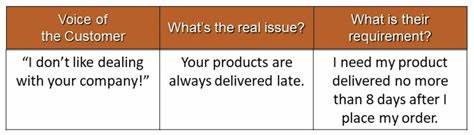
- Miscommunication: one of the major causes of customer complaints have been found to be misunderstanding of the customer perception. This arises many a time due to miscommunication between the customer and the supplier. This misunderstanding leads to wrong identification of the customer requirement leading to gap between what is offered to customer and what his expectation was. This happens in mostly in implied needs when the requirements are assumed. It becomes most critical to identify such requirements and honestly communicate with the customer.
6. Conclusion
Business success depends upon how well the product/service meets the customer requirement. Identifying, translating to product/service features and communication with the customer become of paramount interest. Lastly continuous upgradation with the changing external Environment is a method to keep moving on the growth path.